Chimney sweeping
A clean flue.
A safer fire.
Every fire leaves creosote behind on the inside of your chimney. It’s flammable, it builds up fast, and it’s the leading cause of chimney fires. A yearly sweep takes it out before it becomes a problem.
- Fireplaces, stoves & inserts
- HEPA vacuum, no mess
- Photos of what we find
Why a yearly sweep matters
A Gorge winter means a lot of fires. Here’s what a sweep protects you from.
Chimney fires
Creosote coats the inside of the flue a little more with every fire. Enough of it, and a hot fire can ignite it — sometimes without you even knowing until the damage is done. Sweeping removes the fuel.
Smoke & carbon monoxide
Soot, nests, and debris narrow the flue and slow the draft, so smoke and carbon monoxide don’t clear out the way they should. A clean flue draws better, lights easier, and burns cleaner.
Chimney sweeping
What every sweep includes
Whether it’s a big masonry fireplace or a wood stove in the shop:
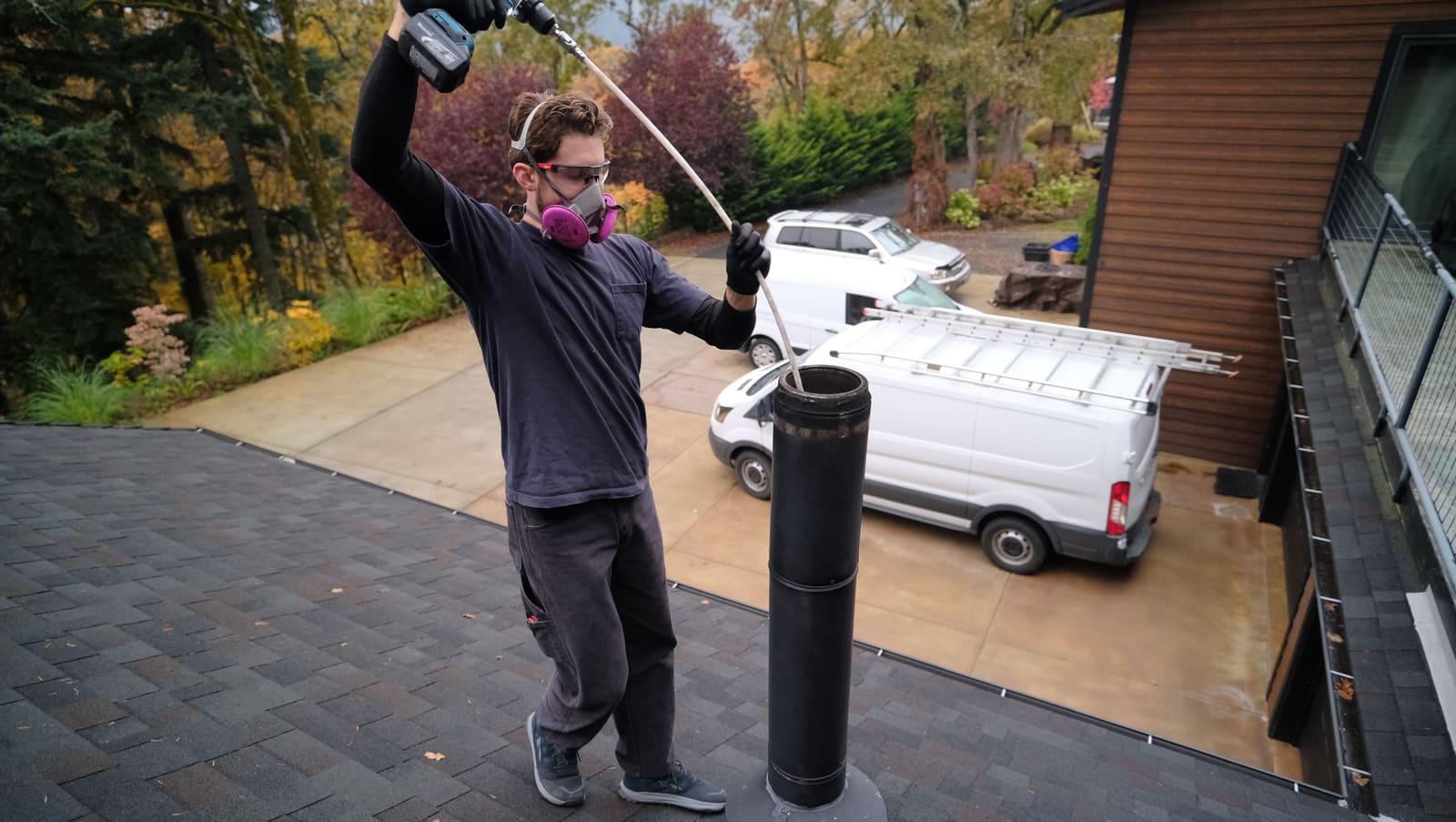
- Your home protected firstDrop cloths down and the opening sealed off before we start. A HEPA vacuum runs the whole time.
- Flue swept top to bottomRotary brushes sized to your flue take the creosote and soot off the walls.
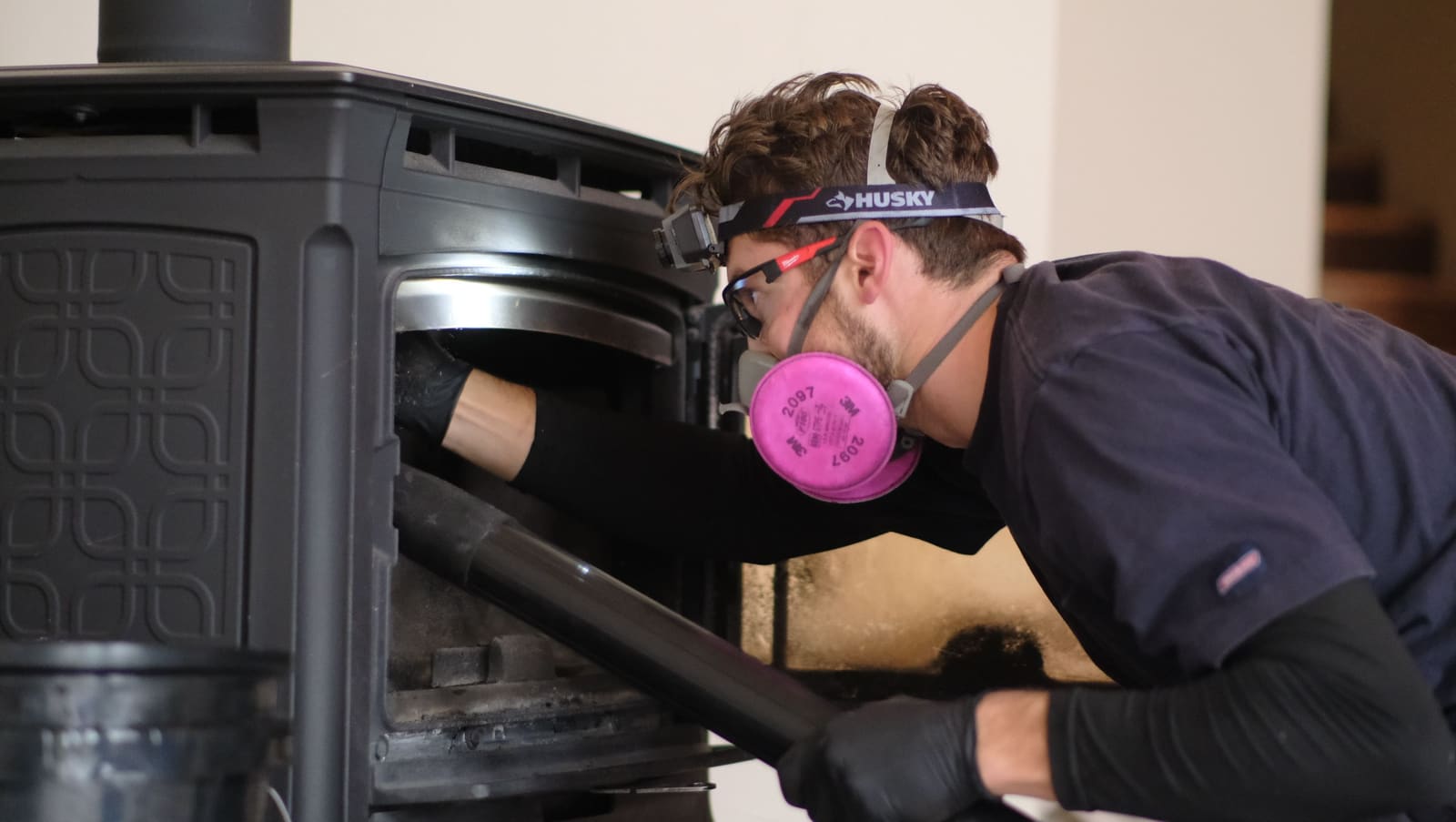
- Smoke chamber, damper & fireboxThe parts below the flue get cleaned too, not just the pipe.
- A look at what we foundWe check the flue, damper, crown, and cap as we go and show you photos of anything that needs attention.
Before & after
What a sweep takes out
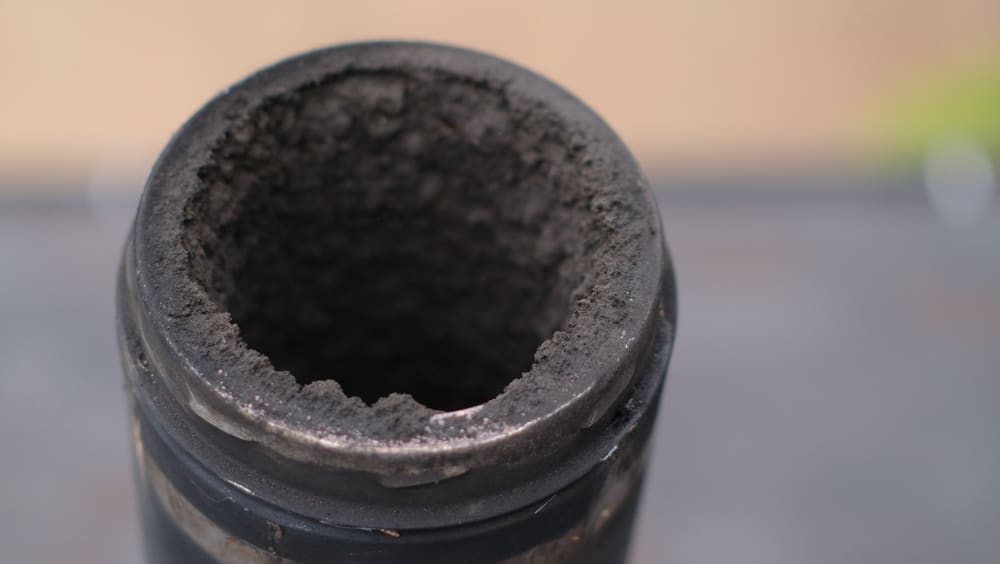
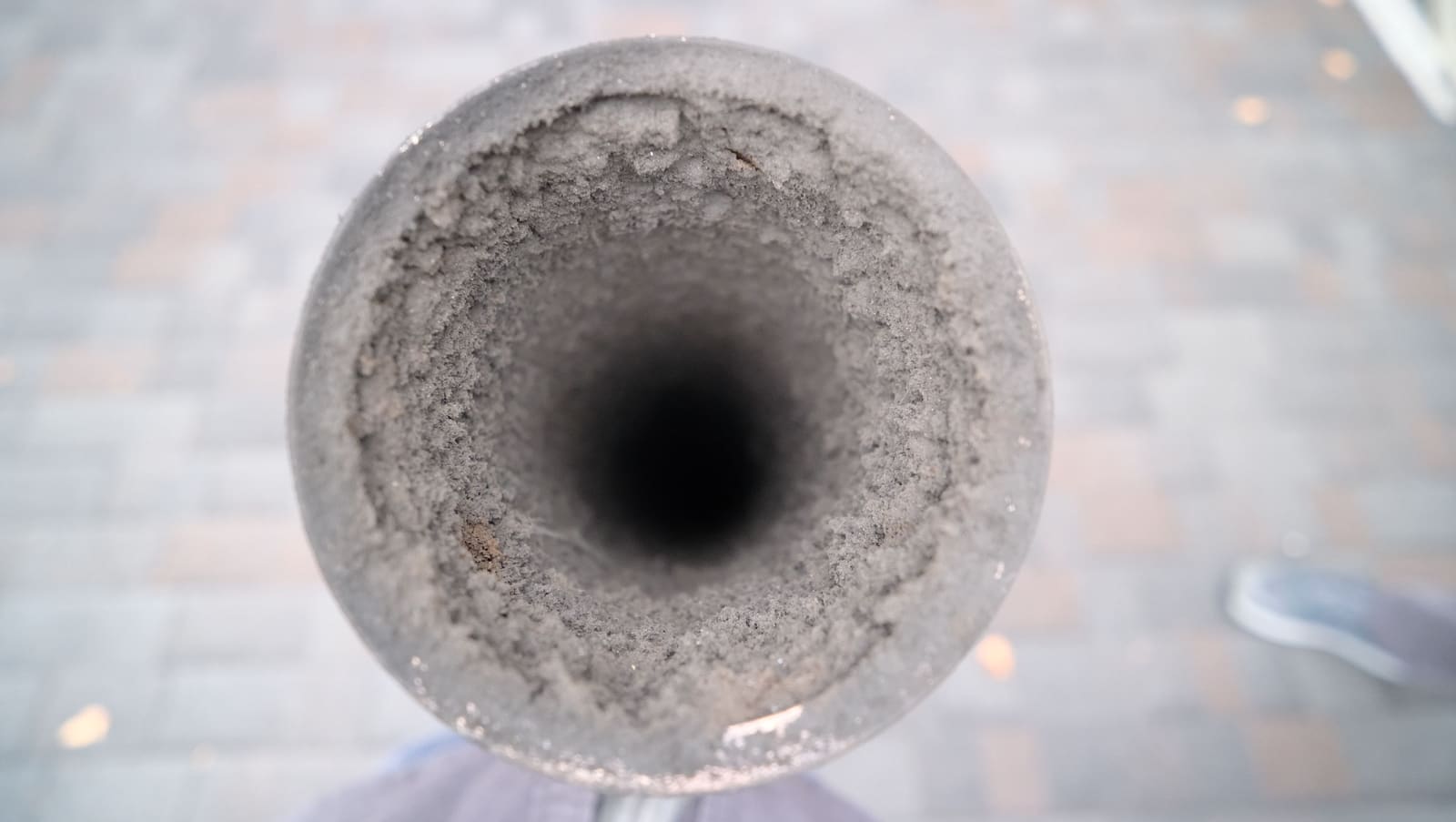
Every bit of that black crust is creosote — fuel for a chimney fire. Here’s the top of the same chimney before and after a sweep.
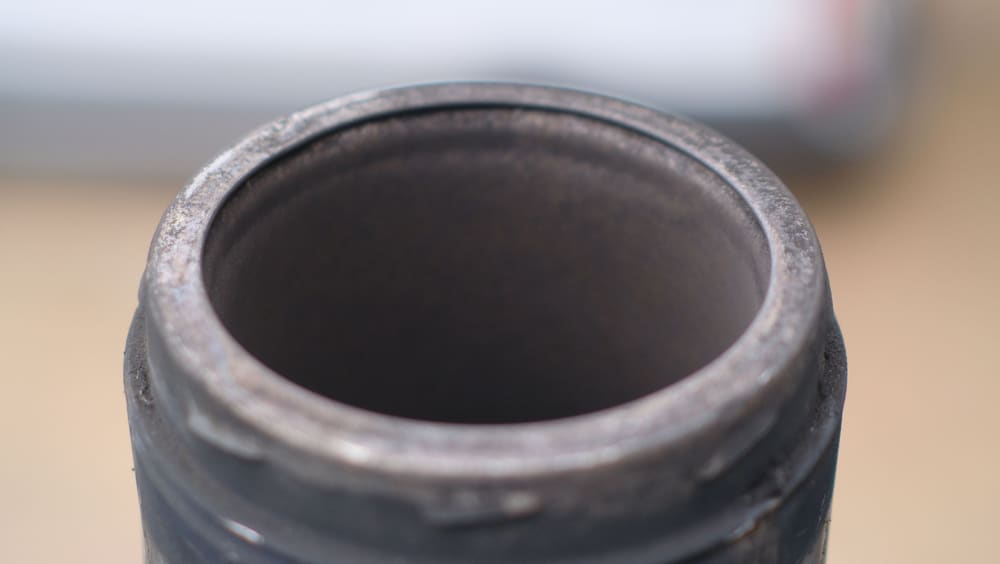
Same chimney, same day
How we sweep your chimney
-
01
Check in
We confirm the plan with you and ask how the fireplace or stove has been burning.
-
02
Protect & seal
Drop cloths down, the opening sealed, and the HEPA vacuum running.
-
03
Sweep
Flue, smoke chamber, damper, and firebox cleaned out from top to bottom.
-
04
Show & tell
We clean up and walk you through what we found, with photos.
Get a chimney sweeping quote
Tell us what you burn and how it’s set up, and we’ll get you a clear, upfront price.
Chimney sweeping FAQ
How often should my chimney be swept?
Once a year for most homes that burn regularly. The national fire safety standard (NFPA 211) calls for a yearly inspection, with sweeping when it’s needed. Heavy burning or wood that isn’t fully seasoned can mean more often.
Do you sweep wood stoves and pellet stoves?
Yes — open fireplaces, wood stoves, fireplace inserts, and pellet stoves. Let us know what you have when you ask for a quote so we bring the right brushes.
How long does a sweep take?
Usually about an hour to an hour and a half for a single flue. Stoves with long runs of pipe, or a flue that hasn’t been swept in years, can take longer.
Should I stop burning before you come?
Yes — please don’t burn for at least 24 hours before your appointment so the firebox and flue are cool and the ashes are out.
Will it be messy?
No. We protect the area with drop cloths, seal off the opening, and run a HEPA vacuum the whole time so soot stays out of your home.
Get your chimney winter-ready
Get your free quote in about a minute, or give us a call.